
Agency Analytics, Profitability & Executive Reporting Software
Turn Agency Project Activity, Tracked Time, Team Capacity, Utilization, & Delivery Progress Into Clearer Operational Insights
Collabix helps agency founders, operations managers, delivery leads, and account teams understand how work is progressing and how resources are being used without manually combining information from separate project, time-tracking, and workload systems.
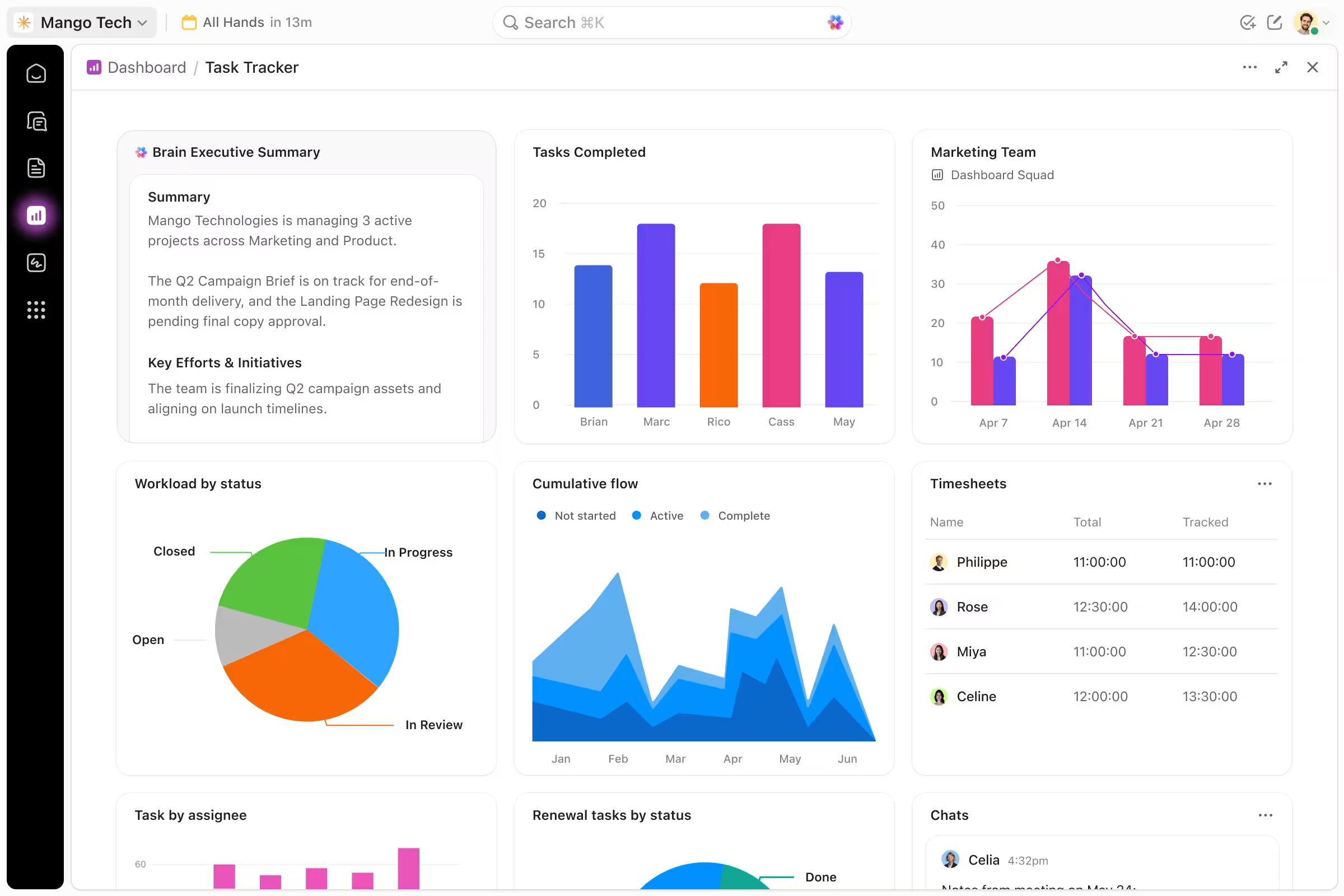
Use connected agency analytics to review project performance, resource pressure, utilization, delivery activity, and profitability context from one workspace.

Why top digital agencies rely on Analytics & Reports
Built from the ground up to eliminate administrative friction.
Real-Time Visibility
Keep all team members and clients synced on deliverable progress without endless status meetings.
Automated Verification
Ensure accurate billing and proof of work with high-resolution activity captures and audit trails.
Enterprise Security
SOC 2 compliant data storage, role-based access control, and granular client guest permissions.
Trusted by High-Velocity Agencies
Turn Logged Hours Into Better Agency Insight
Tracked time is valuable only when it helps explain what is happening inside the agency.
Collabix connects reporting with desktop time tracking, helping teams review recorded hours alongside the projects and tasks generating that effort.
Instead of looking at timesheets in isolation, managers can use time data to understand whether project effort is aligned with delivery expectations.
This can provide useful context around client work, recurring retainers, development projects, campaign delivery, internal work, and resource allocation.
For a more detailed view of recorded activity, teams can also use the work diary.
Connect Project Delivery With Reporting
Agency reporting should explain not only how much time was spent, but also what that time contributed to.
Collabix connects reporting with tasks and subtasks, project boards, and project milestones.
This helps managers review delivery in context.
For example, a project consuming more hours than expected becomes more meaningful when leadership can also see whether important milestones are complete, whether work remains blocked, and whether additional scope has been added.
The current page specifically positions Collabix around turning logged hours and project milestones into profit intelligence.
Understand Agency Profitability With More Context
Agency profitability cannot be understood from revenue alone.
Delivery effort, scope changes, team utilization, workload, and time allocation all affect whether client work is financially sustainable.
Collabix helps bring these operational signals closer together.
Profitability analysis can become more useful when teams review:
Tracked project hours
Billable versus non-billable work
Team utilization
Client workload
Project milestones
Retainer consumption
Available capacity
Delivery effort
These signals can help leadership identify projects or accounts that require deeper review.
Collabix should be used as an operational source of context rather than treating a single metric as the complete measure of profitability.
Review Member Utilization
Utilization helps agency leaders understand how available working capacity is being used.
Collabix provides member utilization tracking, helping teams review billable and non-billable activity alongside wider agency operations.
Utilization reporting can support decisions around staffing, workload balancing, resource allocation, pricing, and growth.
It should always be interpreted alongside role responsibilities and available capacity.
A senior manager with significant internal responsibilities may naturally have a different utilization profile from a delivery specialist.
Connect Analytics With Team Capacity
Capacity tells you how much work your team can realistically handle.
Collabix provides team capacity planning, helping managers understand available bandwidth across the organization.
Connecting capacity with agency reporting can help leadership answer questions such as whether the team has room for additional work, whether an upcoming project will compete with existing commitments, and whether a department is becoming a resource bottleneck.
This is especially important when revenue growth is creating delivery pressure faster than headcount is growing.
Identify Workload Pressure Earlier
Workload problems often appear before project delays become visible.
Collabix provides a visual workload heatmap, giving managers another perspective on how work is distributed.
Analytics become more useful when workload information is considered alongside utilization, tracked time, and capacity.
A team member with high utilization and a heavy workload may require additional support.
A department with high workload and little available capacity may be approaching a delivery constraint.
This allows managers to respond before workload pressure becomes a client problem.
Review Overtime as an Operational Signal
Extended working hours can provide important context around project and resource performance.
Collabix includes active time and overtime tracking, helping managers identify when project delivery is requiring more working time than expected.
Repeated overtime may indicate:
Underestimated project effort
Resource shortages
Scope expansion
Unrealistic deadlines
Heavy client demand
Sprint overcommitment
When overtime is reviewed alongside capacity and profitability context, managers can better understand whether the problem is temporary or structural.
Track Retainer Performance
Monthly retainers can create hidden profitability problems if actual work consistently exceeds the expected level of service.
Collabix's agency retainer management helps connect recurring client activity with tracked time and resource usage.
Reporting around retainers can help teams understand whether client work remains aligned with planned effort.
This provides useful context when reviewing renewals, pricing, scope, or team allocation.
Account managers and operations leaders can identify accounts that repeatedly require more attention than expected before those patterns become financially damaging.
Give Agency Founders Executive Visibility
Founders do not need to inspect every individual task.
They need a clearer understanding of how projects, people, time, and client work affect the business.
Collabix provides dedicated agency operations workflows for founders that connect reporting with delivery, utilization, capacity, and workload.
Executive reporting should help leadership understand where attention is required rather than simply creating more dashboards.
Useful management questions include whether the agency has enough capacity, which teams are overloaded, where margins may be under pressure, which projects require intervention, and whether new hiring is justified.
Improve Delivery Forecasting
Historical and current operational data can help agencies make more realistic delivery decisions.
When teams can review tracked effort, workload, utilization, and milestone progress together, future project estimates can become more informed.
This can improve decisions around staffing, timelines, project pricing, sprint commitments, and resource allocation.
For project and delivery teams, explore sprint and milestone planning.
Understand Project Health
A project may appear healthy because tasks are moving, while operational signals tell a different story.
High tracked hours, excessive workload, repeated overtime, and limited capacity may indicate risk even when the final deadline has not yet been missed.
Combining project status with operational analytics helps managers review project health from several angles.
This is particularly useful for fixed-scope work where additional effort may reduce profitability long before the client notices a delivery issue.
Support Better Resource Allocation
Resource allocation is one of the most important uses of agency analytics.
Managers need to know where available capacity exists and where specialists are becoming overloaded.
Collabix connects reporting with capacity, workload, and utilization data so resource decisions are based on more than manual estimates.
This can help agencies decide whether to redistribute work internally, move deadlines, reduce scope, use contractors, or hire additional employees.
For agencies experiencing growth-related resource pressure, explore capacity balancing for agencies.
Create More Informed Hiring Decisions
Hiring decisions are expensive.
Agencies should avoid adding permanent headcount based on a temporary workload spike, but they should also avoid waiting until delivery quality has already suffered.
Operational reporting can provide supporting evidence by showing whether high workload, utilization, limited capacity, and overtime are recurring patterns.
If the same pressure continues across multiple projects and reporting periods, additional staffing may be justified.
For larger teams, see operations software for growing agencies.
Improve Client Account Reviews
Analytics can also help account managers prepare for client conversations.
Tracked time, delivery activity, project progress, and retainer usage can provide stronger context during reviews.
Rather than relying only on subjective status updates, account teams can use operational information to discuss scope, workloads, completed work, and upcoming requirements.
For client-facing operations, explore client account management workflows.
Keep Reporting Connected to Client Permissions
Internal analytics may contain information that clients should not automatically see.
Utilization, internal workloads, profitability context, and employee activity may need to remain restricted.
Collabix provides client roles and access controls, helping agencies maintain clearer boundaries between internal operational reporting and client-facing information.
This allows agencies to provide transparency where appropriate without exposing sensitive internal data.
Reduce Manual Reporting Across Tools
Disconnected software often forces operations teams to export information from several platforms before creating a usable report.
Project data may live in one tool, tracked time in another, workload in a spreadsheet, and client activity somewhere else.
Collabix's agency tool consolidation approach brings several of these operational workflows closer together.
Connected information reduces the need to manually reconcile different systems simply to understand the state of the agency.
Build an Agency Reporting Rhythm
Analytics become more useful when leadership reviews them consistently.
A practical agency reporting rhythm may include weekly delivery reviews, monthly utilization and profitability reviews, capacity planning, project-risk reviews, and quarterly operational planning.
The exact cadence should depend on agency size and business model.
The important part is to use operational metrics to support decisions rather than collecting data without acting on it.
Avoid Managing the Agency From One Metric
No single metric explains agency performance.
High utilization may indicate strong demand or excessive workload.
High tracked hours may reflect productive delivery or scope problems.
Low capacity may justify hiring or may simply reflect poor scheduling.
Agency reporting works best when several signals are reviewed together.
Collabix helps bring time, projects, utilization, capacity, and workload closer together so managers can interpret metrics within their wider operational context.
Turn Agency Data Into Better Decisions
Connect projects, logged time, utilization, team capacity, workloads, and delivery progress in one operational reporting environment. Give agency leadership better visibility into the signals affecting project performance, resource planning, and profitability.
Frequently Asked Questions
Everything you need to know about this service.
The current Analytics & Reports page is positioned around agency analytics, profit margins, logged hours, project milestones, and executive reporting. Exact report templates and available fields should match the current Collabix implementation.
Collabix connects operational data such as tracked time, utilization, capacity, project progress, and workload. These signals can provide useful context when reviewing project and agency profitability.
Yes. Collabix includes dedicated member-utilization functionality that can be used alongside broader agency reporting.
Collabix connects reporting with project tasks, boards, milestones, time, and resource information, helping managers review delivery from a broader operational perspective.
The current page includes this question in its FAQ section, but the screenshot does not confirm the exact scheduling or email-delivery functionality. Confirm this with the Collabix product team before publishing a definitive answer.
The current FAQ section specifically references custom report filters and groupings. Exact configuration options should be verified against the current product before promising specific capabilities.
The existing FAQ asks about exporting data to external BI tools such as Tableau or Power BI. Because the screenshot does not prove the available export formats or integrations, confirm this capability with the developer before publishing a definitive claim.
Agency founders, operations managers, project leaders, delivery managers, account leads, and resource managers can all use operational analytics to support planning and decision-making.