
Agency Capacity Planning & Workload Balancing Software
Bring Projects Work, Time Data, Availability, And Workload Visibility Together
Plan workloads with greater clarity using Collabix. See team capacity, monitor utilization, identify overloaded team members, and make better staffing decisions before workload problems affect delivery.
Collabix brings project work, time data, availability, and workload visibility together so agency teams can understand how much capacity they actually have before assigning more work.

Key Capabilities & Features
Everything your agency needs to operate seamlessly.
Automated Operations
Save hours weekly with real-time tracking, notifications, and status reports.
Visual Proof of Work
Provide clients with verified activity logs and screenshot diaries.
Enterprise Security
Role-based access, client portals, and encrypted audit trails.
Plan Agency Capacity Before Work Becomes Overload
Agency capacity planning becomes difficult when projects, deadlines, tracked hours, and team availability are spread across multiple systems.
Collabix helps bring that information together so agency owners, operations managers, and project leads can see where capacity is available and where workloads may need attention.
Instead of relying on spreadsheets or manually checking individual schedules, managers can use team capacity planning to understand how assigned work is distributed across the team.
That makes it easier to make informed decisions before committing to new work, moving deadlines, or assigning additional responsibilities to people who are already close to capacity.
See Team Workloads More Clearly
Understanding who is busy is not enough. Agencies need to know how work is distributed, where workload pressure is increasing, and where capacity still exists.
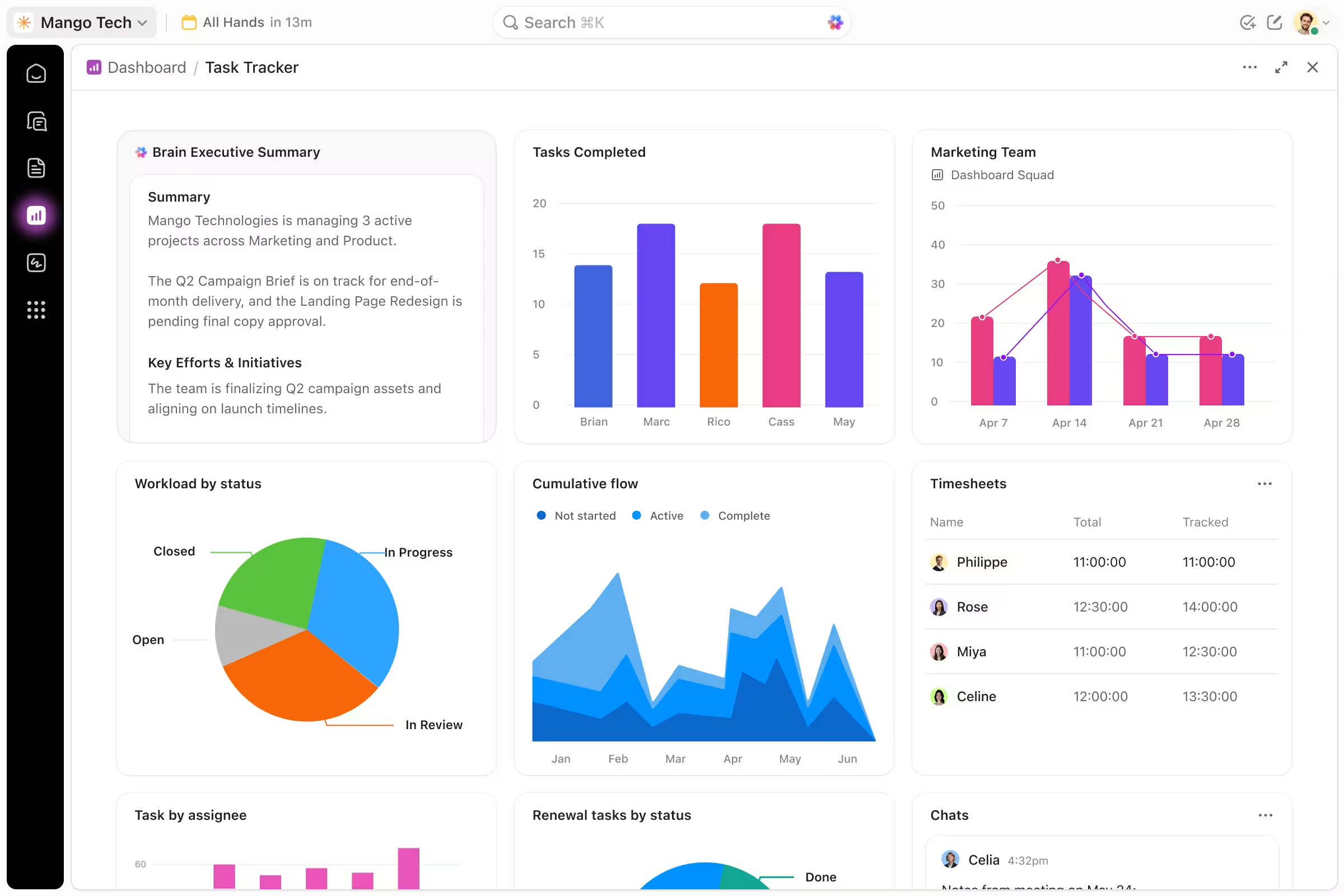
Collabix provides a visual workload heatmap that helps managers review workload patterns across the team.
Use workload visibility to identify:
Team members with available bandwidth
People approaching or exceeding planned capacity
Uneven workload distribution
Areas where assignments may need to be adjusted
Potential workload pressure before it affects delivery
A clearer view of team workload helps project managers make more realistic staffing and scheduling decisions.
Balance Work Across Multiple Team Members
Agency projects often involve several specialists working together across design, development, marketing, account management, and delivery.
Collabix supports more realistic workload planning by helping teams understand how responsibilities are distributed across multiple assignees.
When workloads change, managers can review existing assignments and determine whether work should be redistributed before adding additional tasks.
Combined with Collabix task and subtask management, this helps connect workload planning with the actual work teams are responsible for completing.
The goal is not simply to keep everyone busy. Effective capacity planning means balancing available bandwidth with deadlines, priorities, and realistic delivery expectations.
Connect Capacity With Team Utilization
Capacity and utilization answer two different but closely related questions.
Capacity helps you understand how much work your team can reasonably handle.
Utilization helps you understand how much of that available capacity is currently being used.
Collabix gives agency leaders access to member utilization insights, helping them review how team resources are being used alongside planned workloads.
This additional visibility can help managers identify situations where one team member is consistently overloaded while another has available capacity.
Instead of waiting for missed deadlines or excessive workloads to expose a resource problem, teams can review utilization and workload information earlier and make adjustments where needed.
Identify Overtime and Workload Pressure Earlier
Repeated overtime can be a sign that capacity planning and project allocation are no longer aligned.
Collabix helps agencies monitor workload pressure with active time and overtime tracking.
Combining workload planning with time information gives managers additional context when reviewing team capacity.
For example, if a team member repeatedly works beyond expected hours while carrying a high workload, that may indicate that assignments, timelines, or staffing need to be reconsidered.
Early visibility helps agency managers respond before workload pressure becomes a recurring delivery problem.
Improve Project Delivery Forecasting
Delivery forecasts are only realistic when they account for the people actually responsible for completing the work.
A project may appear achievable on paper, but deadlines quickly become unrealistic if key team members are already committed to other client work.
Collabix helps connect capacity planning with project execution so managers can consider available team bandwidth before making new commitments.
Teams can also use project milestones to organize important phases and delivery points while considering how available capacity may affect project timelines.
This creates a stronger foundation for:
Project scheduling
Staff allocation
Workload balancing
Deadline planning
Resource discussions
Delivery forecasting
For agencies managing several clients and projects simultaneously, this visibility becomes increasingly important as the team grows.
Use Agency Analytics to Support Better Resource Decisions
Capacity planning should not operate separately from the rest of your agency data.
Collabix provides agency analytics and performance reports that help teams understand operational performance alongside workload and utilization information.
Bringing these signals together gives agency leaders a clearer picture of how team resources are being used and where operational changes may be needed.
Instead of making staffing decisions based only on assumptions, managers can review relevant workload, time, and utilization information as part of their planning process.
Built for Agencies Managing Multiple Projects
Collabix capacity planning is designed for teams that need greater visibility as projects, clients, and workloads become more complex.
It can support:
Digital agencies
Performance marketing agencies
Design studios
Software and development agencies
E-commerce agencies
Project management teams
Operations managers
Delivery leads
Agency founders
Growing agencies can also explore Collabix's operations software for growing agencies to see how capacity planning connects with broader agency operations.
Bring Capacity Planning Into Your Agency Workflow
Capacity management works best when workload information is connected to the work your team already manages.
With Collabix, agencies can bring together:
This gives managers a more connected view of projects, workloads, team availability, and operational performance without treating capacity planning as a separate process.
Plan Your Agency's Capacity With More Confidence
See team workloads, utilization, and available capacity in one connected workspace. Make better staffing decisions, identify workload pressure earlier, and plan project delivery with greater visibility.
Frequently Asked Questions
Everything you need to know about this service.
Agency capacity planning is the process of comparing available team bandwidth with existing and upcoming work. It helps agency managers understand whether the team has enough capacity to take on additional projects, whether assignments need to be redistributed, and where workload pressure may be developing.
Capacity represents the amount of work a person or team can reasonably handle, while utilization shows how much of that available capacity is currently being used. Monitoring both gives managers a clearer understanding of resource availability and workload levels.
Agencies can reduce overload by reviewing team capacity, workload distribution, utilization, deadlines, and time data before assigning additional work. Earlier visibility makes it easier to identify workload imbalances and adjust assignments before they become ongoing problems.
Agency teams often manage several client projects at the same time. Poor workload distribution can create bottlenecks, unrealistic deadlines, overtime, and inconsistent delivery. Workload balancing helps managers distribute responsibilities more realistically based on available capacity.
Agency owners, operations managers, project managers, delivery leads, department heads, and team leads can use capacity planning software when they need to understand staff availability and allocate work across multiple projects.
Yes. Capacity information gives managers more context when planning deadlines and allocating resources. Understanding whether the required people actually have available bandwidth can make delivery forecasting more realistic.